
Review
Blood Dungeon Review: Launch Facts, Fit, and Key Limits
Blood Dungeon Review: verified launch facts, movement-first strengths, audience fit, media reception boundaries, and an honest no-score update policy.
Official video
Video ID verified from the Messhof game page; playback is served by YouTube.
Review status: launch-window framework, checked August 30, 2026. This page separates verified product facts from opinions that still require longer playtime.
This is a fan-made launch-window review, not an official endorsement and not a score aggregator. The confirmed product frame is strong enough to explain the proposition: Messhof’s game pairs automatic weapons with active 2D movement, nine playable characters, six survival arenas, and more than 100 enemies, quests, weapons, and upgrades. The broader question of long-term balance or final critical consensus needs dated, traceable evidence.
What Stands Out
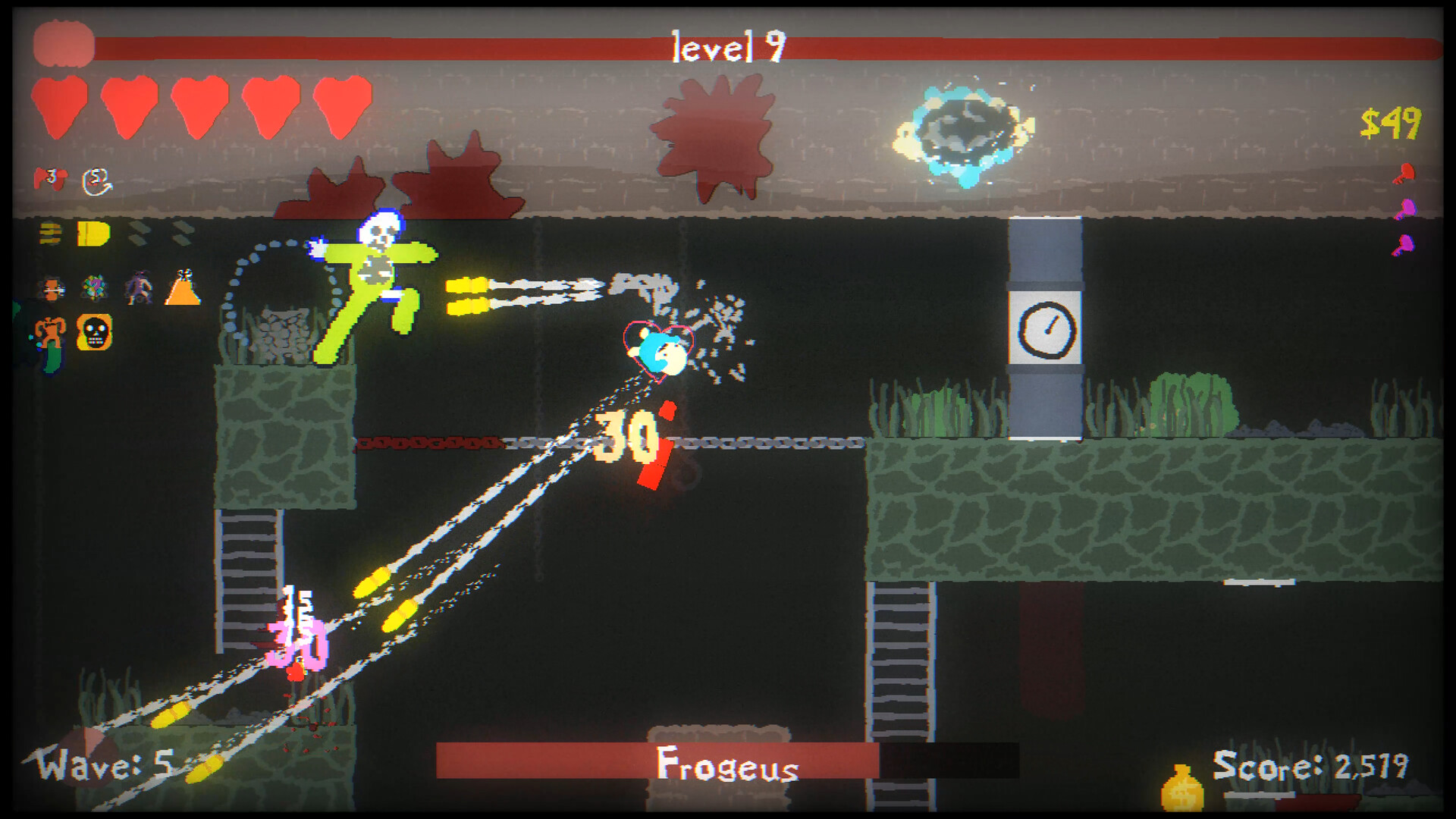
The central hook is clear: automatic attacks leave the player free to focus on fast platforming. Ladders, chains, walls, ceilings, and water turn movement into a full combat system rather than a simple way to circle a flat arena.
The scope is also substantial for a compact game: nine characters, six survival arenas, over 100 enemies, over 100 quests, and over 100 weapons and upgrades.
The useful differentiator is not simply that the game has upgrades. It is that ladders, chains, walls, ceilings, and water are part of the player’s movement space while weapons attack automatically. That gives positioning a more direct role than a flat-arena description would suggest, and it is the clearest verified reason for a player interested in platforming to investigate further.
Who It Is For
Blood Dungeon is likely to fit players who enjoy:
- Bullet-heaven progression but want more direct movement execution.
- Short runs with both temporary and permanent upgrades.
- Unlock-driven experimentation across characters and arenas.
- Score competition, daily dungeons, and repeatable mastery.
It may be a weaker fit for a player looking for published co-op, cross-play, or a completely documented optimal-build meta. The checked official sources describe a single-player game and do not establish those extra features. That is not a judgment against the game; it is a boundary for matching the right expectation to the available evidence.
Reception Tracking
Steam review percentages and Metacritic coverage are dynamic. They should only be displayed with a visible retrieval date and review count. This guide does not freeze a launch-week score into evergreen copy.
The source materials contain individual media reviews with different ratings and different emphasis, but those are not the same as a verified current aggregate. Metacritic’s details page could be located, yet its score and review count could not be independently confirmed during source verification. This page therefore does not write a numerical Metacritic score or describe a consensus that the primary check did not establish.
What This Review Will Not Claim
This review will not label one character, weapon, or permanent upgrade as universally best without current release-build evidence. It will not call Blood Dungeon a multiplayer game, identify unconfirmed future platforms, or equate Xbox Play Anywhere with cross-play. It also will not adopt an outdated price, review count, or storefront promotion as permanent copy.
For a purchase decision, start with the platform guide and the first-party store link for your region. For a verified explanation of the progression loop, read Blood Dungeon Mechanics Explained. A review becomes more useful when readers can see which parts are confirmed facts and which parts remain open questions.
A Dated Reading of Media Coverage
The collected media material includes individual reviews, not a substitute for a live aggregate. Game Informer’s PC review gives an 8/10, PC Gamer’s review gives 66/100, and Loot Level Chill gives 8.5/10; each is a P1 publication with its own date, platform context, and editorial standard. They can illustrate that criticism exists, but they should not be blended into an official score or a claim that all critics agree.
Across those individual reports, active movement appears as a recurring subject, while balance, early difficulty, and long-term repetition receive different treatment. That is a cautious editorial reading of three samples, not a population claim. It is more useful to say the views differ than to turn a small, changing sample into “universally praised” or “widely disliked.”
How This Page Updates
This page can update a factual section when a first-party store changes platform availability, a new official patch note clarifies a system, or a clearly dated review is added as an individual source. It will keep a visible check date beside dynamic material. It will not silently replace a launch statement with a later claim, because readers need to see the difference between a product fact and a time-bound response.
A final recommendation belongs to the reader’s priorities: active 2D movement, single-player runs, unlock-driven progression, and platform availability are all confirmed parts of the current product frame. If those features match what you want, the official store pages linked here are the correct final purchase check. If you need co-op, a verified meta, or a confirmed aggregate score, the source set currently leaves those needs unanswered.